
How Small Restaurants Can Stop Losing Customers From Missed Calls
Restaurants miss 20%-40% of calls during peak hours. Every unanswered ring is a potential booking lost. Here is how small restaurants stay responsive without adding pressure to the team.

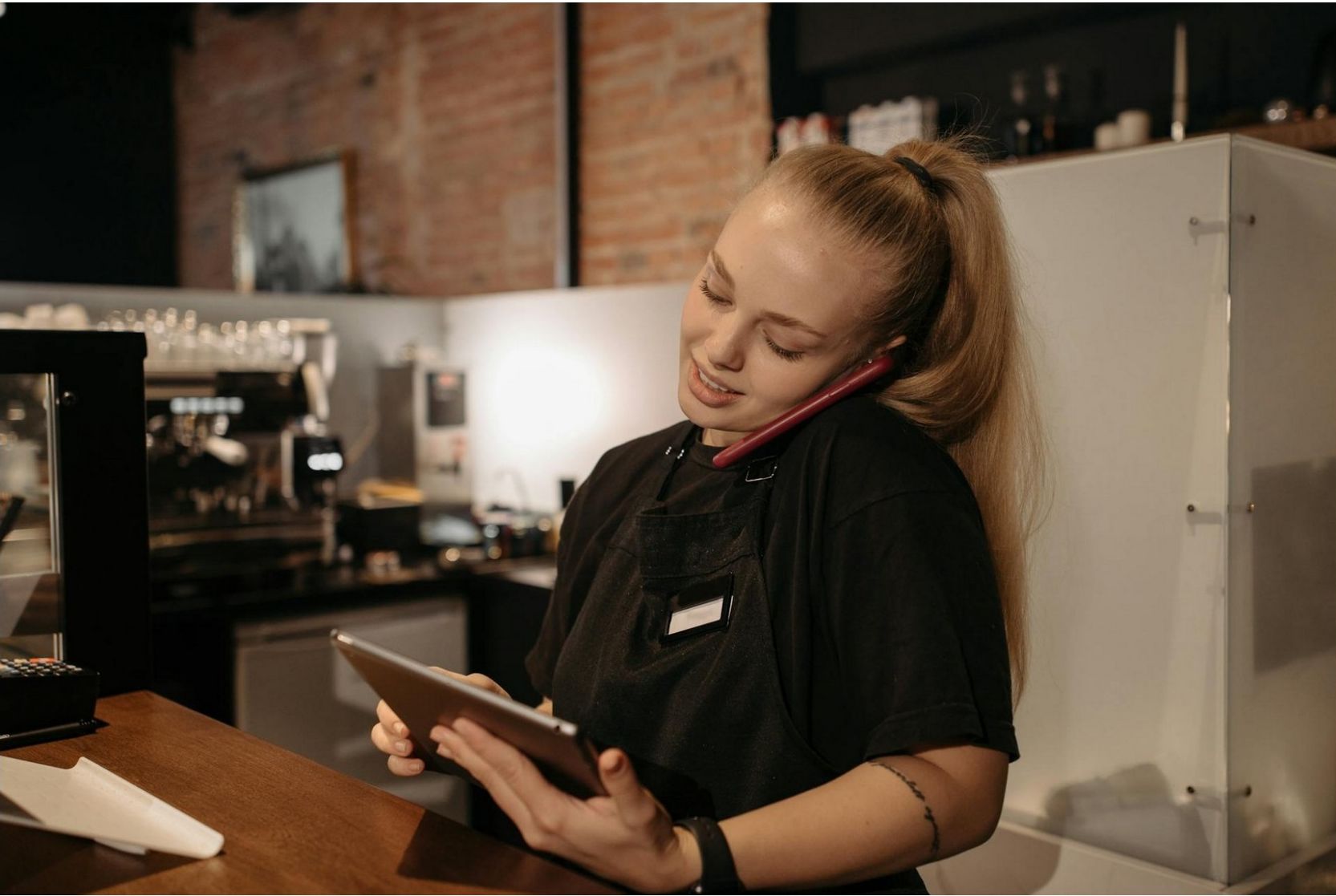
Multitasking mid-call
It is usually the same hours when it happens. Dinner service starts getting busy, takeaway orders begin coming in, new guests are walking through the door, and the phone keeps ringing in the middle of everything. Someone notices it, someone says they will get it in a second, then another table needs help and the call disappears into the background.
For small restaurants, missed calls rarely feel dramatic at the moment. Most of the time, nobody even realizes what was lost. Sometimes it is a reservation. Sometimes it is a takeaway order. Sometimes it is someone checking whether there is still space for tonight before deciding where to eat.
The difficult part is that these customers usually do not wait very long. If nobody answers, they move on.
Why missed restaurant calls matter
A lot of restaurant phone calls come from customers who are already close to making a decision. They are not casually browsing. They want to reserve a table, check if there is space tonight, ask whether the kitchen is still open, or place an order before heading home. The call often happens at the point where customer intent is already high.
That is why missed restaurant calls can quietly turn into lost revenue without restaurants fully noticing it. Industry data suggests small businesses miss between 20% and 40% of inbound calls during peak periods.
Online orders leave records. Cancelled reservations can be tracked. A missed call leaves almost nothing behind. If someone tries calling, gets no answer, and books somewhere else instead, most restaurants never really see that loss clearly reflected anywhere.
And it usually happens during the same periods every week. Friday evenings. Lunch rush. Weekend peaks. Exactly when the team is already stretched thin.
Why calls get missed during busy hours
In most cases, calls are missed simply because everyone is already busy doing something else. During service, the team is juggling several things at once. Seating guests, handling takeaway orders, clearing tables. The phone keeps ringing in the middle of all of it.
Smaller restaurants also do not always have someone dedicated to answering calls. Reservations are often handled between tasks rather than as a separate role. One person picks up when they can. Another promises to call back later. Sometimes nobody gets to it in time.
None of this means the restaurant is poorly run. It is usually just the reality of a busy service environment where too many things are happening at once. The challenge is that customers calling the restaurant do not see that side of things. They only experience whether someone answered or not.
Restaurant phone reservations are not as simple as they sound
Phone calls remain one of the most direct channels for restaurant bookings, particularly when customers want an immediate answer. From the outside, phone reservations seem straightforward. A customer calls. A table gets booked. End of story.
In reality, most calls come with extra questions. Someone wants to move a reservation to a later time. Another customer asks whether outdoor seating is available. Someone else needs space for a larger group or wants to check if the kitchen is still open.
Those details matter, especially during busy hours when staff are already moving quickly between different tasks. A booking gets written down too quickly. A callback happens too late. A customer repeats information several times while staff are trying to manage guests standing in front of them.
Small moments like these do not always seem serious individually. Over time, they shape the customer experience more than many restaurants realise. Most restaurants already try to work around the problem. Some rely on online booking systems. Others return calls later or simply accept that certain calls will be missed during peak hours.
The difficulty is that phone calls usually happen when customer intent is strongest. People call when they want an answer now, not thirty minutes later. A missed call during a busy dinner service can easily become a booking that never comes back. That pressure is one reason more restaurants have started looking at AI receptionists as operational support, a way to stay responsive even when the team is already at full stretch.
How an AI receptionist can help
An AI receptionist can answer calls while the restaurant continues operating normally in the background. It can handle common questions, support reservation requests, provide opening hours, respond to basic customer enquiries, and reduce the number of calls left unanswered during busy periods.
The value is not about replacing human interaction. Restaurants still depend heavily on hospitality and personal service. What AI receptionists help with is coverage. Customers can still get a response even when the team inside the restaurant is already occupied with service.
For smaller restaurants especially, that can mean fewer missed bookings, fewer lost takeaway orders, and less pressure on staff trying to manage everything at once.
Where Qallio fits
Qallio is designed for businesses that cannot always stop what they are doing every time the phone rings. For restaurants, it works more as support around the team rather than a replacement for it. Calls can still be answered while staff stay focused on guests, service, takeaway orders, and everything else happening inside the restaurant during busy hours.
That can be especially useful for smaller teams where phone calls are handled in between other tasks rather than by someone dedicated to reservations or customer enquiries.
Instead of calls going unanswered during service, customers can still get basic information, ask about availability, or make reservation requests while the restaurant continues operating normally in the background. The goal is simply to reduce the number of customers who disappear because nobody had a free moment to answer the phone.
Getting started with Qallio
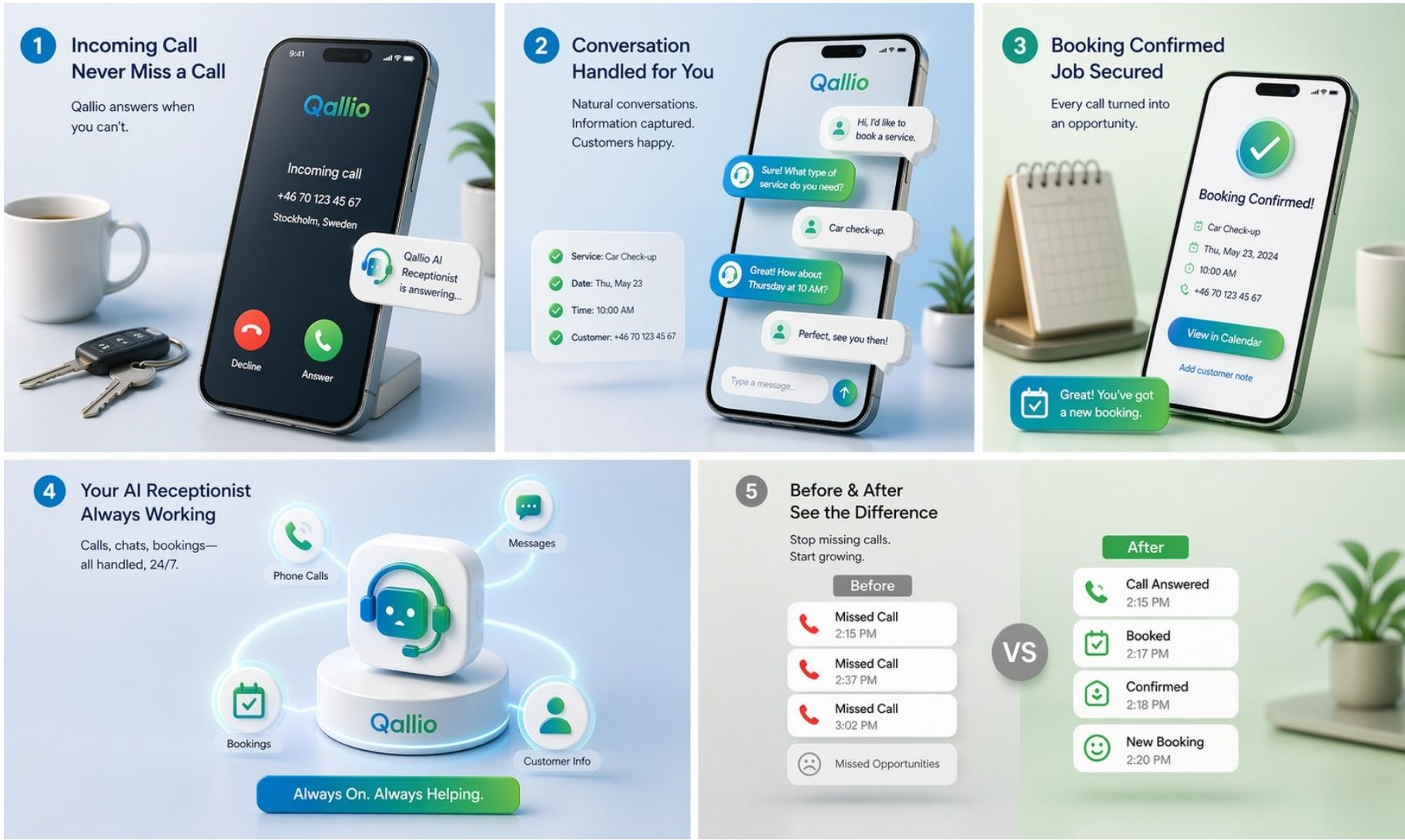
Getting started with Qallio does not require any technical background or outside help. From the homepage, create an account using your email address and enter a few basic details about your restaurant: your business name, preferred language, and a short description of what you offer. You can then upload your menu, add your website, or write in any details Qallio should use when handling calls. The entire process takes around five minutes.
Once your information is submitted, Qallio generates your AI receptionist and assigns a dedicated phone number to your account. From that point, your restaurant is ready to receive calls. You can review summaries, manage bookings, and update your settings directly from the dashboard at any time. No technical knowledge is needed to keep things running.
How to start measuring missed calls
Before changing anything, it helps to understand when and why missed calls are happening in the first place. Most restaurants already have enough information to spot patterns. Looking through call history over the past few weeks usually shows the same busy periods appearing again and again. Lunch hours, dinner rush, Friday evenings, weekends.
Once those periods become clear, it becomes easier to estimate what those missed calls may actually represent. Some are simple inquiries. Others may have been reservations, takeaway orders, or customers deciding where to spend money that evening.
Even a basic review of missed calls alongside busy service hours can give restaurants a much clearer picture of whether the current setup is working.
Missed calls are part of the customer experience
Missed calls are rarely just a phone issue. For restaurants, they are part of the customer experience from the very first interaction. Long before a guest sits down at a table, the experience often starts with whether someone answered the call.
Most small restaurants do not need more systems or more pressure during service. They just need a more reliable way to handle customer demand when the restaurant is already busy.
Restaurants already have enough happening during dinner service. Missing calls should not become one more thing the team has to worry about in the middle of everything else.
See how Qallio helps restaurants handle calls during busy hours.
Frequently asked questions
Get started with Qallio
Turn on forwarding and let Qallio answer when you cannot.
More articles
Guide
Answering service, voicemail or AI receptionist: what fits a small business?
Three ways to handle the calls you can't take, what each one is good at, and how to test which fits your business in an afternoon.
Home services
How Home Service Businesses Can Manage Calls While on the Job
In home services, the person doing the work is often somewhere a phone cannot follow. See how Qallio answers every call so the job stays in progress and the caller doesn't disappear.