
How Salons Can Reduce No-Shows and Missed Bookings by Fixing Their Phone Process
A missed call and a rushed booking often lead to the same place: an empty chair. See how fixing your salon's phone process reduces no-shows and missed bookings without adding staff.
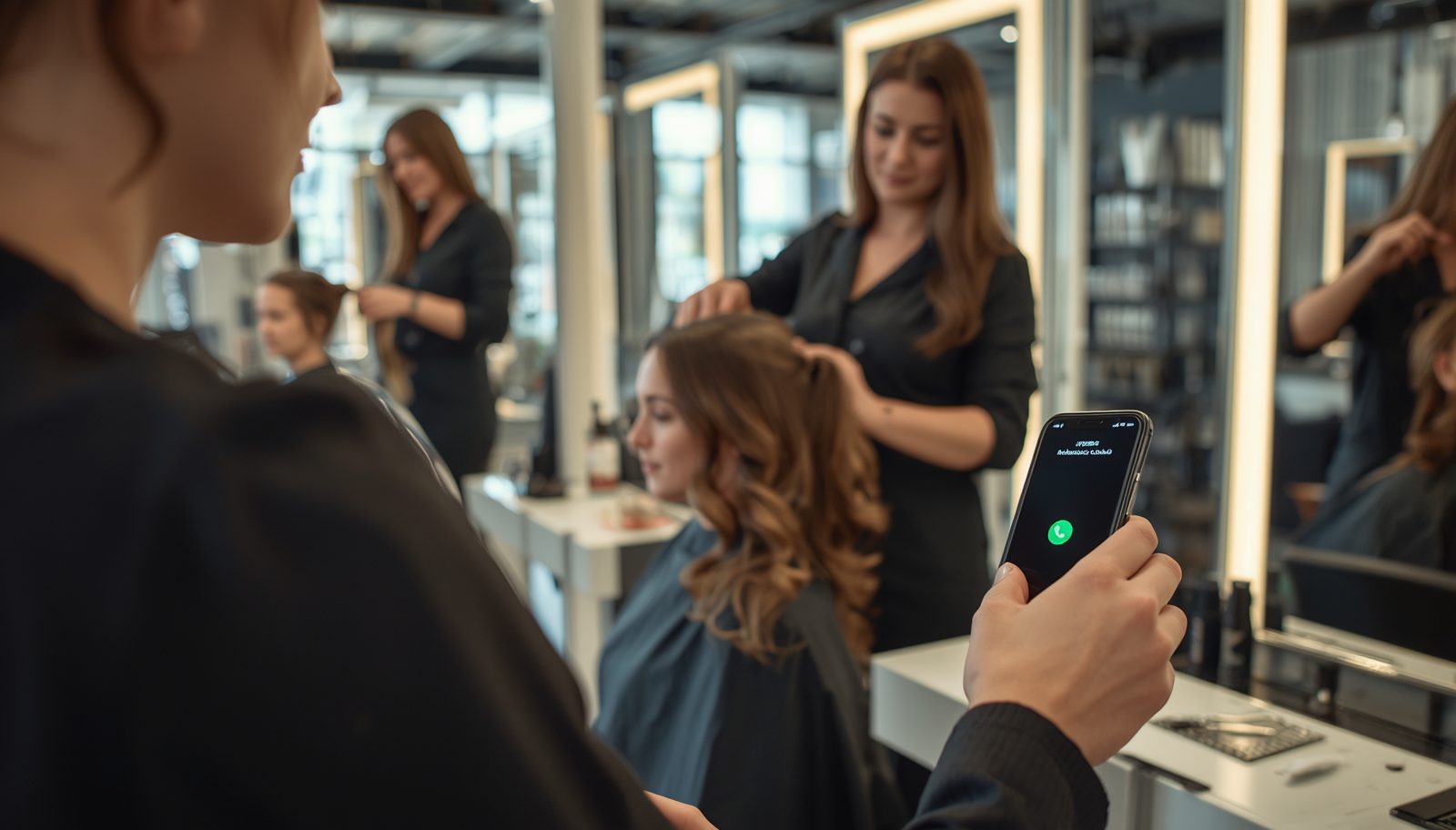
The phone rings mid-service
A stylist is halfway through a color service. A nail tech has both hands wrapped around someone's fingers. The front desk is checking someone in, taking a payment, and answering a question about retail products at the same time.
The phone rings. Nobody picks up.
Most salons treat this as a small inconvenience. It happens during every shift, so it stops registering as a problem. But the choice in that moment is never really "answer or don't". It's "interrupt the client in the chair, or let the call disappear". Neither one is free.
What gets interrupted when someone answers mid-service
A stylist who stops to answer the phone is not just losing a few seconds. Color has to go on within a set window. A client mid-sentence about a wedding, or a haircut they've been nervous about, suddenly has half the stylist's attention while the other half is on the phone.
Nail techs face a more literal version of this. Wet polish does not wait for a phone call. Neither does color timed to come off in exactly twelve minutes.
Some salons solve this by letting the phone ring out instead, which avoids the interruption but creates the other problem entirely. The call disappears, and there's no record of who tried to reach you or why.
Either way, something gets lost. The question is which version of that loss your salon can live with.
What happens when nobody answers instead
If the phone rings out, the cost shows up differently. The caller tries another salon. Or they send a message with half the details, asking for "anytime tomorrow" while you're still working out who's free.
It also creates follow-up work nobody wants. Someone has to notice there was a missed call, guess what it might have been about, and call back hoping the person still wants the appointment. On a day that's already full, that step rarely happens the way it should.
Where no-shows quietly start
No-shows and missed calls look like separate problems. Most of the time they trace back to the same moment.
A call that does get answered, but in a rush, often gets recorded a little wrong. The time is off by ten minutes. The service gets written down as a trim when the client actually asked about color. Nobody catches it because the person taking the call was also checking someone in at the same time.
The client shows up on the day expecting one thing, or does not show up at all because they were never sure the booking actually went through. This is not the full explanation for every no-show. People forget appointments for reasons that have nothing to do with the phone. But a portion of no-shows start exactly here, in a call that was answered too quickly to get right.
Fixing how the phone is answered will not solve every no-show. It solves the ones that started with a detail nobody had time to confirm properly.
How Qallio keeps your team's hands where they need to be
When a call comes in, Qallio answers it. Nobody has to put down a color brush or step away from a client to figure out who's calling or what they need.
For simple questions, that's the end of it. Someone asking about hours, location, or whether you take walk-ins gets an answer immediately, and the call is done.
For booking requests, Qallio takes down what the caller wants: the service, a preferred time, their name and number. That request lands in your inbox the moment the call ends, marked as something to follow up on. Nobody on your team had to stop what they were doing to take it down. The confirming and scheduling still happens on your end, but it happens when someone actually has a free moment, not in the middle of a foil.
That's the real shift. Not that every call turns into a finished booking automatically. It's that the call no longer has to interrupt the work happening in your salon to get answered.
- The client in the chair keeps your full attention. A color appointment, a consultation, a tricky cut. None of it gets paused because the phone happened to ring at the wrong moment.
- Every request comes in the same way, recorded the same way. Whether someone calls at noon or right before closing, the details land in your inbox consistently, instead of depending on whoever happened to grab the phone.
- After-hours calls still get answered. Someone calling on a Sunday evening to ask about next week gets a response, instead of a voicemail they probably won't leave.
- Your team stops having to choose. Between the client standing in front of them and the phone ringing behind them, there's no longer a decision to make.
Where Qallio fits
Qallio is not a replacement for your front desk team. It answers the calls they cannot get to.
When a client calls during a service, a check-in, or after hours, Qallio picks up immediately, takes the booking request, and records the details clearly. Staff stay focused on the people already in the salon. The caller still gets through.
An AI receptionist for salons is configured around how your salon actually runs. Service menu, hours, pricing ranges, and booking process. When a call needs a decision that goes beyond the standard setup, like a complex color consultation or a complaint, Qallio takes a message and passes it along instead of trying to handle it itself.
Hiring extra front desk coverage costs more than the hourly rate suggests, with benefit costs alone averaging close to 30% of total compensation. Qallio provides the same coverage during a fully booked Saturday as it does on a quiet Tuesday, without adding to payroll.
Salons that want to keep their existing number can do so through call forwarding. A call that goes unanswered on the current line forwards directly to Qallio, so clients dial the same number they always have.
Getting started with Qallio
Getting started does not require any technical background or outside help.
- Create your account. Create your free Qallio account using your email address and enter your business name and preferred language. Upload your service menu, add your website, or write in the details you want Qallio to use on calls. The whole process takes around five minutes.
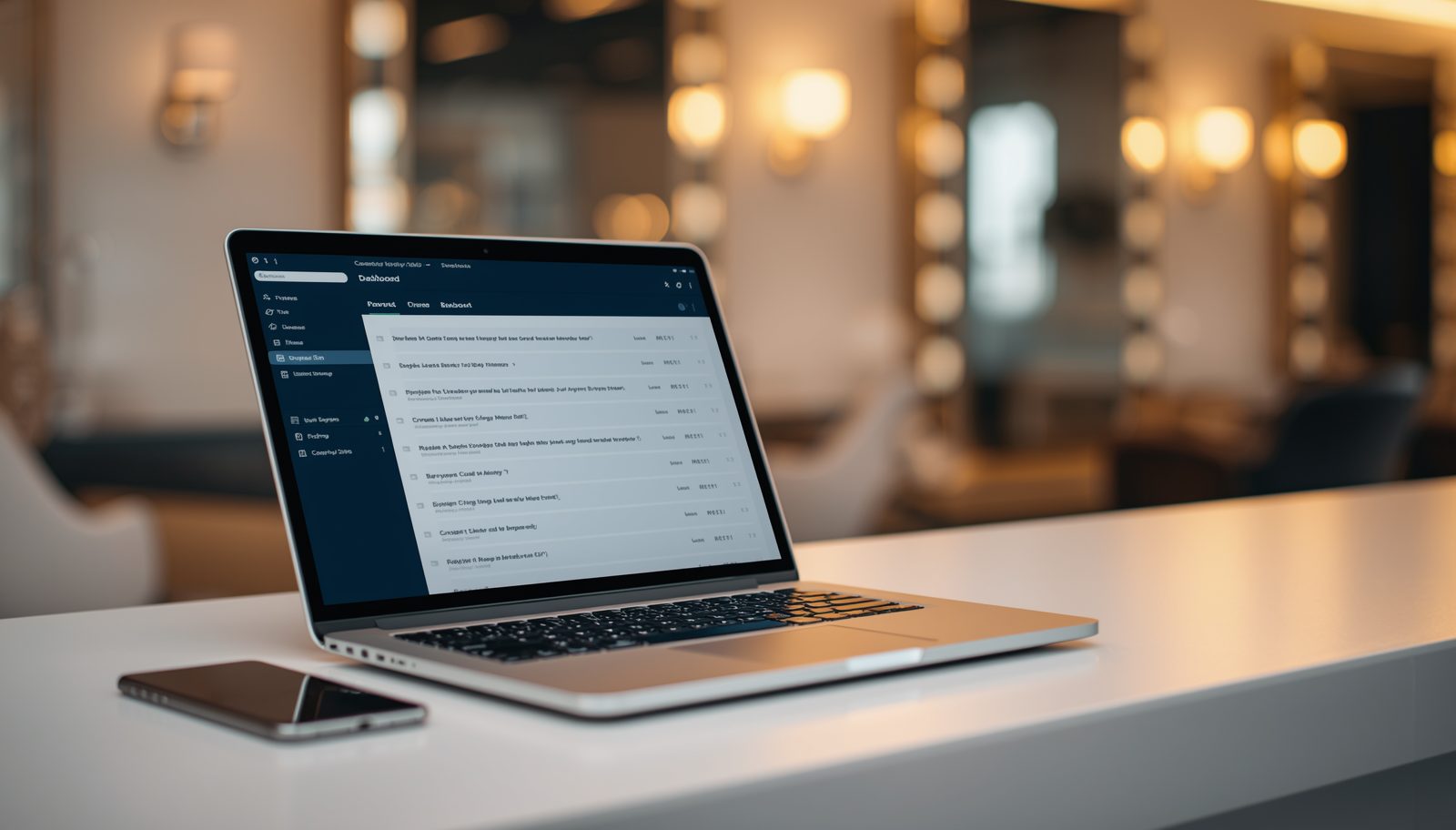
- Go live. Once your information is submitted, Qallio generates your AI receptionist and assigns a dedicated phone number to your account. From that point, calls are being answered. You can review summaries, adjust settings, and update information directly from the dashboard at any time.
A note on what this actually fixes
Fixing the phone process reduces the no-shows that started with a confused booking or a confirmation that never arrived. It will not stop a client who genuinely forgot, or who had something come up at the last minute. Those still need reminders, clear policies, and the kind of relationship that makes someone call ahead instead of just not showing.
What it does fix is simpler and more immediate. Every call gets answered. Every detail gets recorded the same way, whether it is a quiet Tuesday or a fully booked Saturday. That alone removes one of the more common starting points for both missed bookings and no-shows, without asking your team to do anything differently.
A booking is only as good as the call that created it
A no-show is rarely just a client forgetting. Often it traces back to a call that was rushed, a detail that got missed, or a confirmation that never went out because nobody had a free hand to send it.
A phone system for beauty salons does not change how your salon runs day to day. It changes what happens in the moments when the phone rings and everyone is already busy.
Start answering every call. Create your free Qallio account and be ready in under five minutes.
Frequently asked questions
Get started with Qallio
Turn on forwarding and let Qallio answer when you cannot.
More articles
Guide
Answering service, voicemail or AI receptionist: what fits a small business?
Three ways to handle the calls you can't take, what each one is good at, and how to test which fits your business in an afternoon.
Home services
How Home Service Businesses Can Manage Calls While on the Job
In home services, the person doing the work is often somewhere a phone cannot follow. See how Qallio answers every call so the job stays in progress and the caller doesn't disappear.