
How Dental Clinics Can Reduce Missed Patient Calls and Improve Booking Rates
Dental clinics lose new patients every peak hour to unanswered calls. See how an AI receptionist helps reduce missed patient calls and improve booking rates without adding pressure to your front desk.
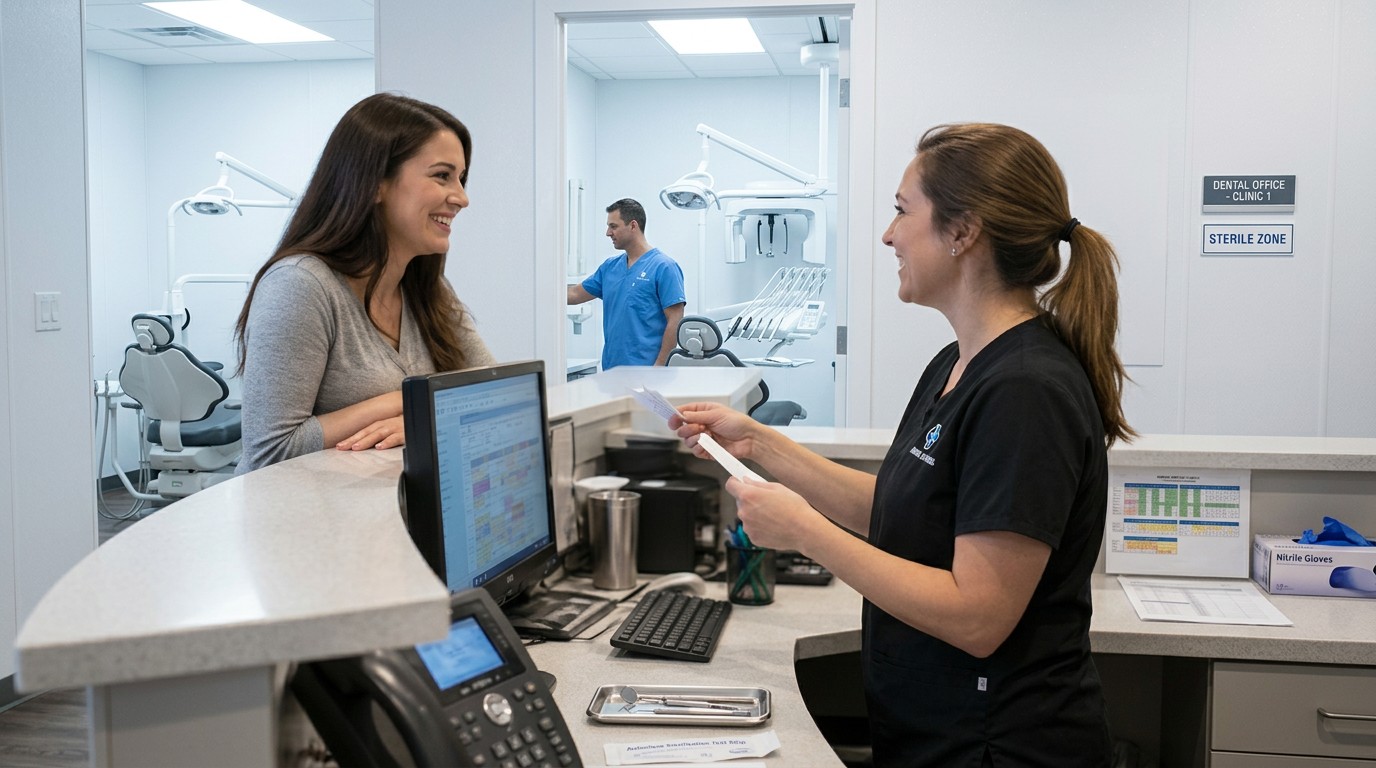
Monday morning at the clinic
It is Monday morning at a dental clinic. The waiting area has patients checking in. The receptionist is verifying insurance for one patient, answering a billing question for another, and coordinating with the treatment team at the same time.
The phone rings.
The caller is usually a new patient looking to book a first appointment. They found the clinic on Google, they are ready to schedule, and they are deciding between two or three options nearby.
Nobody picks up.
The patient moves on within a minute. A different clinic answers. That clinic books the appointment.
For dental clinics, that call represents more than a single appointment. It is the beginning of a patient relationship that never started. Long before a patient sits in the chair, the experience begins with whether someone answered the phone.
Why patient calls matter more than most clinics realise
Patients who call a dental clinic are rarely browsing. They are calling to book an appointment, ask about a specific treatment, check whether the clinic is accepting new patients, or follow up on an existing booking.
The window for capturing that interest is short. A patient searching for a new dentist in their area will typically call two or three clinics in sequence. The first clinic to provide a clear and immediate response is often the one that secures the booking.
A new patient who books that first appointment does not represent a single visit. Dental care is ongoing. Regular check-ups, follow-up treatments, and referrals to family members often follow from that first phone call. A call that goes unanswered ends that relationship before it begins.
Phone calls remain one of the most direct ways patients contact dental providers, particularly when they have specific questions that a website cannot answer. For dental clinics, the phone line is one of the most direct paths to new patient acquisition.
Calls that go unanswered during peak periods represent patients who decided without the clinic's involvement.
Why dental front desks struggle with call volume
The challenge for most dental practices is not a lack of care. It is a structural one.
Dental receptionists manage a wide range of simultaneous responsibilities. Patient check-ins, insurance verification, billing discussions, treatment explanations, appointment coordination, and walk-in queries all compete for attention during the same service window.
Industry research consistently identifies staffing as one of the most significant operational challenges facing dental practices. When front desk capacity is already stretched across those responsibilities, call handling becomes the first thing that suffers during peak periods.
Those peak periods follow a predictable pattern. Monday mornings, the hour after lunch, and late afternoon consistently produce the highest call volumes. They also consistently coincide with the moments when the team is already fully occupied with patients inside the clinic.
Smaller practices face this most directly. A single receptionist managing check-ins, insurance queries, and walk-in patients during a busy period cannot stop every task to answer every call without affecting the people already in front of them.
The phone does not get answered, not because nobody cares, but because nobody has a free hand.
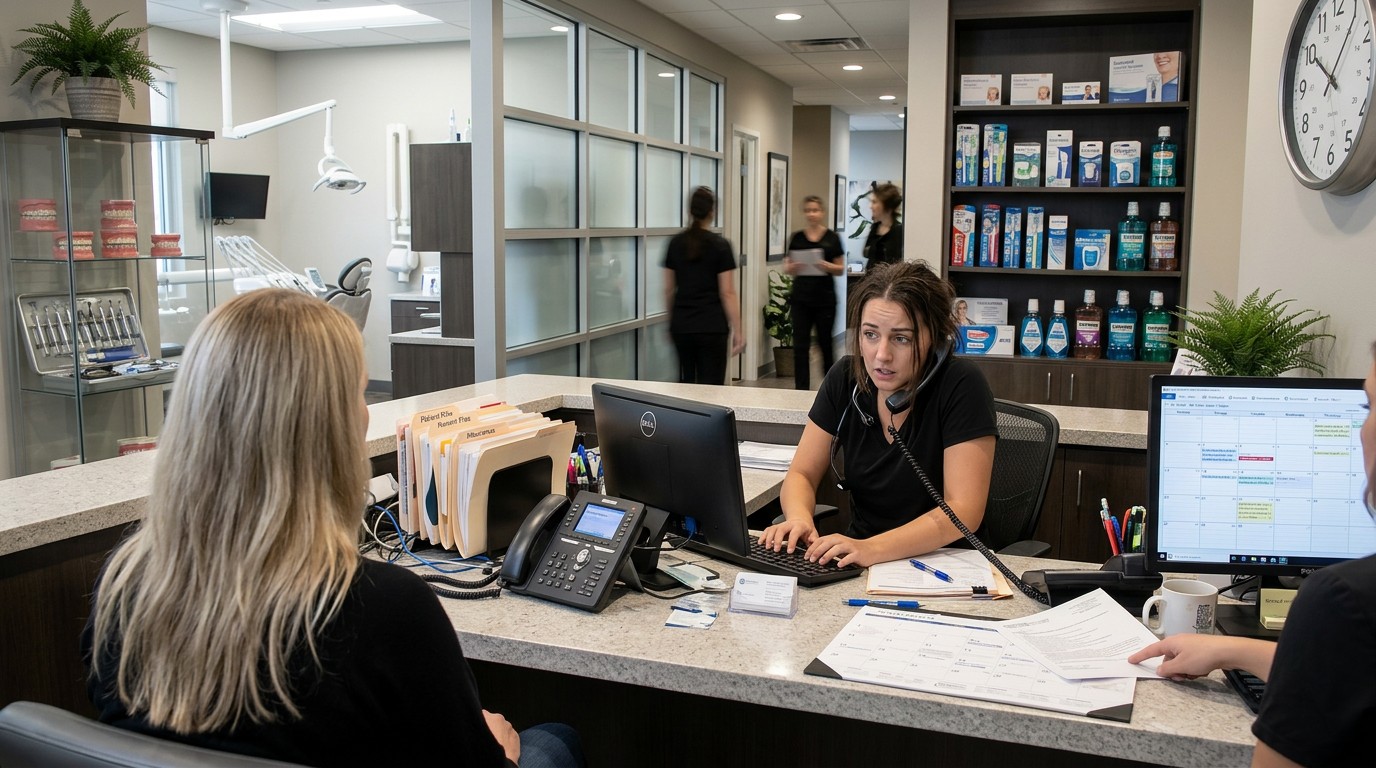
What happens when patient calls go unanswered
A new patient who cannot get through to a dental clinic rarely calls back. They move to the next option on their search results. The clinic never receives a notification that the opportunity existed. There is no record in the appointment book. The patient simply does not appear.
Existing patients experience the same gap in a different way. A patient calling to reschedule, ask about post-treatment symptoms, or confirm an appointment detail forms their impression of the clinic based on whether someone answered. Consistent responsiveness builds patient confidence. Consistent missed calls erode it, regardless of the quality of clinical care the practice provides.
The financial consequence is difficult to measure directly because missed calls leave no record. A clinic missing calls during a busy Monday morning loses new patient opportunities that never appear anywhere in the system. The appointment slot was available. The team was present. The patient simply contacted a different clinic.
Front desk teams working at capacity are not failing. They are managing a volume of competing responsibilities that a single point of contact cannot fully absorb.
How AI call handling supports dental practices
Most dental clinics do not need more staff to handle calls more consistently. They need coverage during the specific hours when existing staff are already fully occupied with patients inside the practice.
A phone answering system for dental clinics provides exactly that. Incoming calls are answered straight away, regardless of what else is happening at the reception desk. Patients receive accurate responses to common questions, including opening hours, new patient registration, appointment availability, and directions. The front desk team stays focused on the patients already present in the clinic.
AI phone systems can take more than one incoming call at a time. During Monday morning surges or post-lunch call peaks, callers are far less likely to reach an unanswered line while the team is occupied with someone standing in front of them. Each caller gets a response at the moment they are most ready to book.
For dental practices, this means the gap that currently exists during peak hours closes without restructuring the team, without hiring additional reception staff, and without changing how the clinic operates day to day.
Where Qallio fits
Qallio is designed for practices that cannot always stop what they are doing every time the phone rings.
For dental clinics, it works as support around the existing front desk team. Calls are answered while staff continue managing check-ins, insurance verification, and patient coordination. Patients receive responses to common enquiries without the team having to interrupt their current task.
Qallio can be configured to handle the call types most common in dental practices: appointment requests, opening hours, new patient information, and general clinic queries. The reception team gets involved when a call requires specific clinical knowledge or a decision that goes beyond the standard setup.
Clinics that want to keep their existing phone number can do so through call forwarding. When a call comes in on the current number and nobody picks up, it forwards directly to Qallio. Patients dial the same number they always have and still receive an immediate response.
The goal is to make sure no patient who calls the clinic during a busy period disappears without a response.
Getting started with Qallio
Getting started with Qallio does not require any technical background or outside help.
- Create your account. Create your free Qallio account using your email address and enter your business name and preferred language. You can then upload information about your practice or add your website, and Qallio pulls what it needs from there. The entire process takes around five minutes.
- Go live. Once your information is submitted, Qallio generates your AI receptionist and assigns a dedicated phone number to your account. From that point, your clinic is ready to receive calls. You can review call summaries, manage bookings, and update your settings directly from the dashboard at any time. No technical knowledge is needed to keep things running.
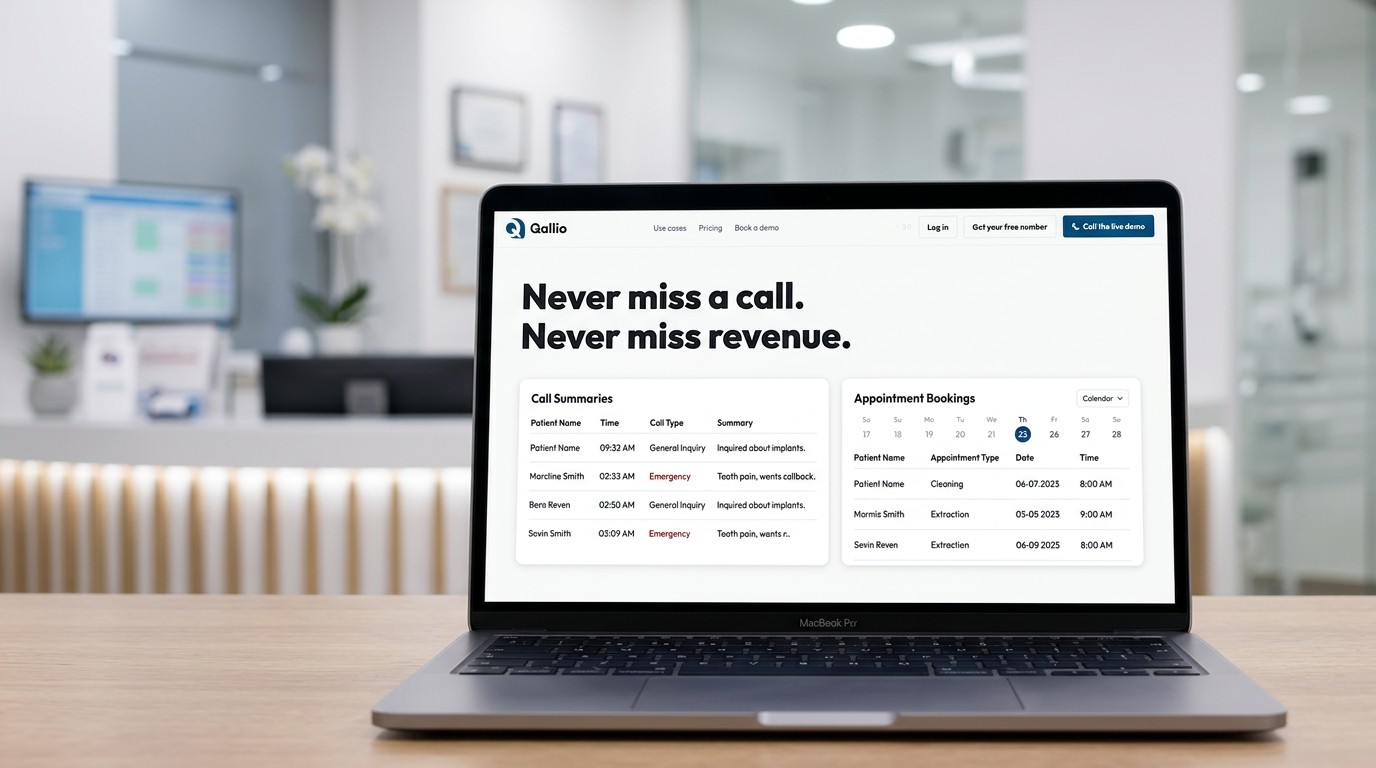
Five ways an AI receptionist reduces missed patient calls in dental clinics
- Answers calls during peak periods. Patients who call during Monday morning check-in or the lunchtime rush get a response, regardless of what else is happening at the front desk. No unanswered rings and no voicemail during opening hours.
- Handles routine patient enquiries without staff involvement. Questions about opening hours, new patient registration, appointment availability, and clinic location are handled automatically. The front desk team stays focused on the patients already inside the practice.
- Takes more than one call at a time. A surge in call volume during busy periods is far less likely to leave patients reaching an unanswered line. The system can handle several calls at once, with no drop in response quality.
- Captures patient details accurately. When a patient wants to leave a message or request a callback, Qallio takes the information clearly and passes it to the team. No details get missed in the middle of a busy clinic day.
- Keeps the line covered when every staff member is occupied. Unlike a single receptionist limited to one call at a time, Qallio provides consistent coverage regardless of how many patients are present in the clinic or how many calls arrive at once.
Calls are part of the patient experience
For a dental clinic, the patient experience starts before the appointment. It starts when someone decides to call.
Whether that call gets answered shapes what the patient thinks of the clinic before they have sat in the chair. A patient who cannot get through does not leave a review of the experience. They book elsewhere, and the clinic never knows the opportunity existed.
Most dental practices do not need more complexity at the front desk. They need a more reliable way to handle patient communication during the hours when the team is already fully occupied with clinic operations.
A phone answering solution for dental clinics means the front desk team does not have to choose between the patient at the counter and the patient on the line.
Start reducing missed patient calls at your clinic. Create your free Qallio account and be ready to receive calls in around five minutes.
Frequently asked questions
Get started with Qallio
Turn on forwarding and let Qallio answer when you cannot.
More articles
Guide
Answering service, voicemail or AI receptionist: what fits a small business?
Three ways to handle the calls you can't take, what each one is good at, and how to test which fits your business in an afternoon.
Home services
How Home Service Businesses Can Manage Calls While on the Job
In home services, the person doing the work is often somewhere a phone cannot follow. See how Qallio answers every call so the job stays in progress and the caller doesn't disappear.