
Phone Answering Solutions for Takeaway and Delivery Restaurants
Takeaway restaurants lose orders every peak hour to unanswered calls. See how a phone answering solution for restaurants keeps every caller covered without adding pressure to your team.
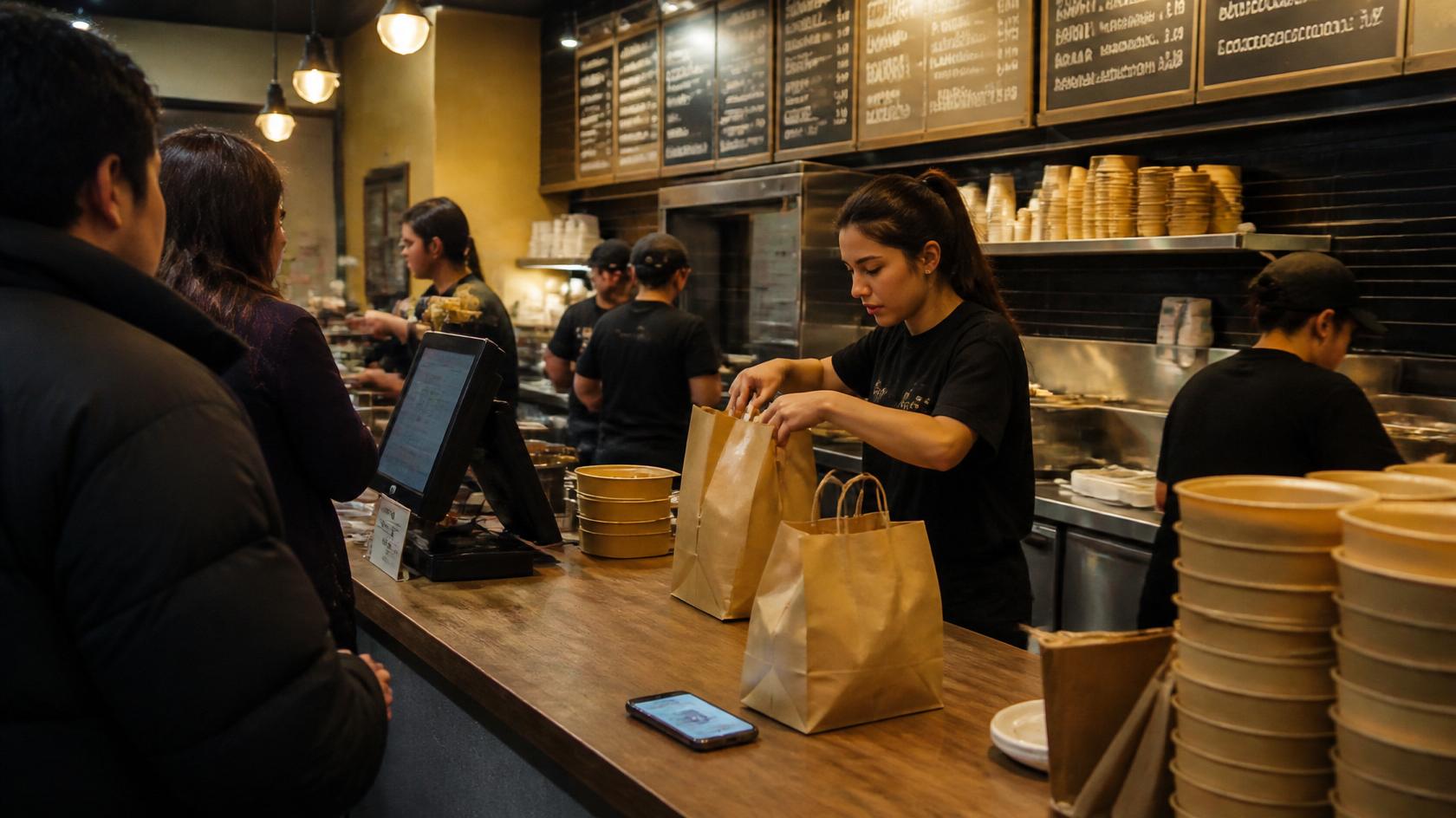
When the phone rings mid-rush
It is 7pm on a Friday. Takeaway orders are stacking up at the counter. The phone keeps ringing somewhere behind the till.
One customer wants to place a delivery order. Another needs to check whether the kitchen is still accepting pickups. Someone else has a question about an allergy before deciding where to eat tonight.
These moments happen during the same service window every week. Staff are already moving between the kitchen, the counter, and active orders. The phone becomes one more demand arriving at the worst possible moment.
Sometimes the caller is standing outside deciding between two takeaway places nearby. If nobody answers, they move on within minutes. Customers who cannot get through rarely try a second time. For takeaway and delivery restaurants, a missed call is often a missed order.
Why phone calls matter for takeaway and delivery restaurants
Takeaway and delivery customers contact restaurants at the point where their decision is already made. They are not browsing. They want to place an order, confirm a pickup time, ask about a specific menu item, or check whether delivery is available in their area.
Phone calls for takeaway operations tend to arrive in short concentrated windows around lunch and dinner. The volume builds quickly during those periods, and customers expect an immediate answer before moving on.
Online ordering platforms handle many standard orders. Customers still call when they have questions that cannot be answered by a menu page, when they need to change an order already placed, or when they want to speak with someone before committing to a delivery.
For takeaway and delivery restaurants, the phone remains a direct order channel. Calls that go unanswered during peak hours represent potential orders that never get completed.
Why takeaway calls are harder to manage during service
The challenge is that call volume peaks at the same time as everything else.
During lunch and dinner rushes, staff are handling counter orders, coordinating with delivery drivers, preparing food, and managing walk-in customers while the phone continues ringing in the background.
Most independent takeaway restaurants do not have a staff member dedicated purely to answering calls. The phone gets picked up between tasks whenever someone happens to be free. During peak periods, that window often does not exist.
Delivery orders create another layer of pressure. Customers call to ask where their order is, whether changes are still possible, or how long delivery will take. Those conversations usually happen in the middle of the busiest service window, when staff already have too many things happening at once.
Orders get written down too quickly. A callback happens too late. A customer repeats their order over background kitchen noise. Some callers hang up before anyone answers at all.
These moments do not always feel significant individually. Across a full service week, they add up to a consistent pattern of lost orders and customers who just moved on.
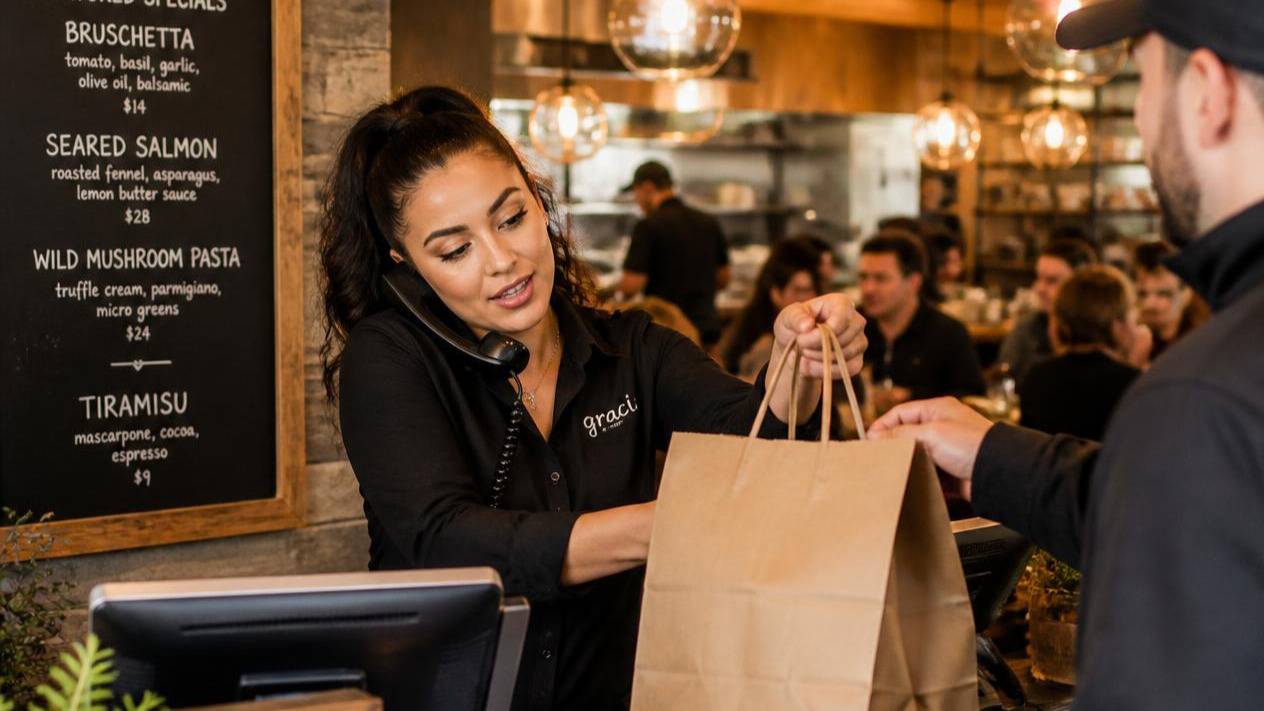
What restaurants currently do to manage the problem
Many restaurants direct customers toward online ordering platforms to reduce incoming call volume. This works well for customers who are comfortable ordering digitally and covers most standard order types.
Customers still call when they have questions, delivery issues, or special requests that do not fit a standard order form. For those callers, the phone is the only channel that works.
Some restaurants assign one team member to handle calls during rush periods. Larger teams may be able to do this consistently. Smaller operations usually cannot spare someone during peak hours.
Others rely on voicemail and return calls later when service slows down. For takeaway customers ordering during a specific dinner window, a callback thirty minutes later rarely converts into a completed order.
Most missed calls happen during the exact hours when restaurants are already working at full speed. A restaurant call answering system provides another layer of coverage during rush hours without adding staff.
How AI call answering systems support takeaway restaurants
AI phone answering systems help restaurants manage customer communication during peak hours, when staff are already fully occupied with orders and service.
Instead of missing calls or forcing staff to constantly switch attention between the kitchen and the phone, incoming queries are handled instantly in the background. Customers receive immediate responses to common questions such as opening hours, pickup availability, delivery zones, menu items, and order status.
Research on restaurant call behaviour shows that rush hours are the period when the highest number of calls go unanswered, often leading directly to lost orders.
AI systems reduce this friction by handling multiple incoming calls simultaneously. Even during a dinner rush, when several customers call within a short time frame, each call can still be answered without delay.
Large hospitality platforms such as Yelp have also begun introducing AI-powered call handling tools, reflecting a broader shift toward automation in peak-hour communication.
For delivery-heavy restaurants, this typically covers the most frequent inquiries entirely: delivery coverage, estimated wait times, order updates, and pickup availability.
The result is more consistent customer communication and fewer missed orders during the busiest periods of service.
Where Qallio fits
Qallio is designed for businesses that cannot always stop what they are doing every time the phone rings.
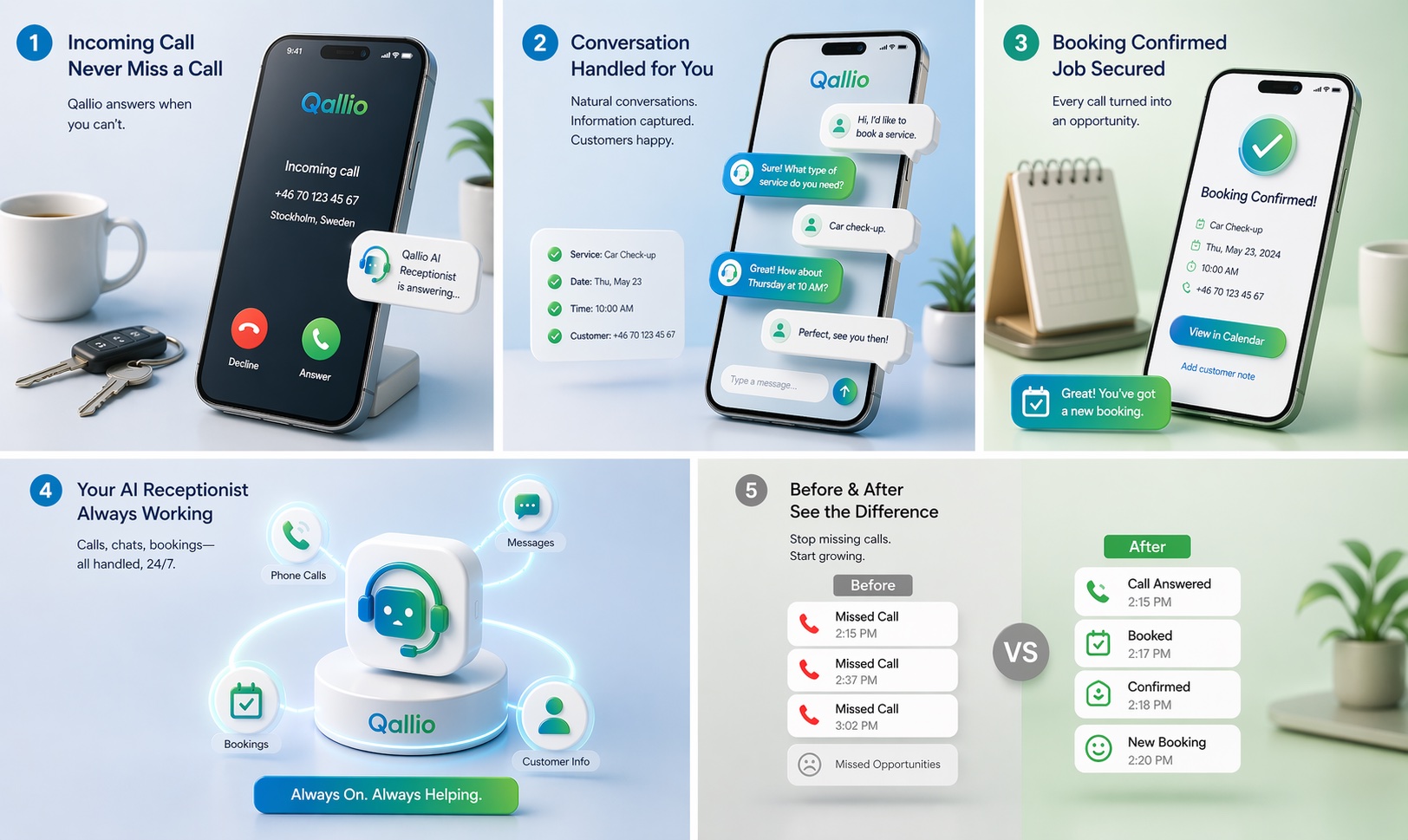
For takeaway and delivery restaurants, it works as support around the existing team. Calls get answered while staff continue handling orders, preparing food, and managing service. Customers receive responses to common questions and order enquiries without depending on staff availability at the moment.
Qallio can be configured to handle the call types most common in takeaway and delivery operations: opening hours, pickup availability, delivery area questions, and order-related enquiries. Staff get involved when a call requires a decision that falls outside the standard setup.
Restaurants that want to keep their existing phone number can do so through call forwarding. When a call comes in on your current number and nobody picks up, it forwards directly to Qallio. Customers dial the same number they always have and still get an immediate response.
The goal is to reduce the number of customers who do not complete their order because nobody has a free moment to answer the phone.
Getting started with Qallio
Getting started with Qallio does not require any technical background or outside help.
- Creating your free Qallio account starts with your email address, your business name, and your preferred language. You can then upload your menu or add your website, and Qallio pulls the information it needs from there. The entire process takes around five minutes.
- Once your information is submitted, Qallio generates your AI receptionist and assigns a dedicated phone number to your account. From that point, your restaurant is ready to receive calls. You can review call summaries, manage orders, and update your settings directly from the dashboard at any time. No technical knowledge is needed to keep things running.
Calls are part of the customer experience
For a takeaway or delivery restaurant, the customer experience starts before the food is prepared. It starts when someone decides to call.
Whether that call gets answered shapes what the customer thinks of the restaurant before they have tasted the food. A customer who cannot get through does not leave a review. They do not send a complaint. They order somewhere else.
Most small takeaway restaurants do not need more operational complexity. They need a more reliable way to handle customer communication during the hours when everything else is already happening at once.
A phone answering solution for restaurants means the team does not have to choose between the order on the counter and the customer on the line.
Start handling takeaway and delivery calls more reliably. Create your free Qallio account and be ready to receive calls in under five minutes.
Frequently asked questions
Get started with Qallio
Turn on forwarding and let Qallio answer when you cannot.
More articles
Guide
Answering service, voicemail or AI receptionist: what fits a small business?
Three ways to handle the calls you can't take, what each one is good at, and how to test which fits your business in an afternoon.
Home services
How Home Service Businesses Can Manage Calls While on the Job
In home services, the person doing the work is often somewhere a phone cannot follow. See how Qallio answers every call so the job stays in progress and the caller doesn't disappear.